
ENERGY
Built to move
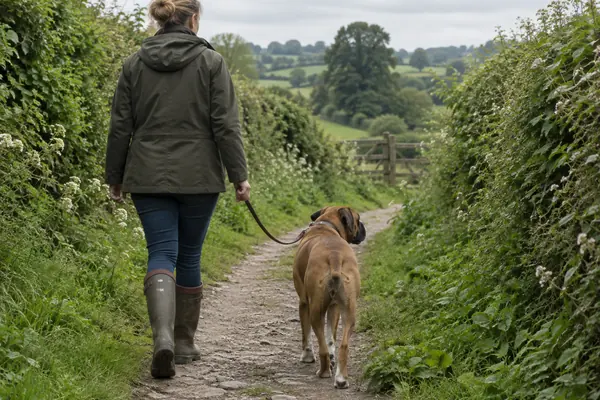
The Kennel Club lists the Boxer as needing more than 2 hours of exercise a day, and suggests a large house and a large garden.
Check the needs
WHAT THE EVIDENCE SAYS
MORE THAN 2 hours a day
AI-generated image, not a photograph of a real person or place.
The Boxer is a big dog with a big need to move.
Descended from a German hunting dog, it is now a family companion that makes up about one in every hundred dogs seen by UK vets. Here is what its history, the Kennel Club and the largest study of the breed's health say.
THE SHORT ANSWER
Energetic, fairly large and easy to groom.
Its health patterns are now well measured.
ENERGY
The Kennel Club lists the Boxer as needing more than 2 hours of exercise a day, and suggests a large house and a large garden.
Check the needsHEALTH
In a study of 3,219 UK Boxers, the most common issues were ear infections, gum lumps, eye ulcers and dental disease. Cancer stood out as a breed priority.
See the numbersHISTORY
The Boxer descends from the Bullenbeisser, a German dog used to hunt bear, boar and deer, thought to have been crossed with the Bulldog.
Read the history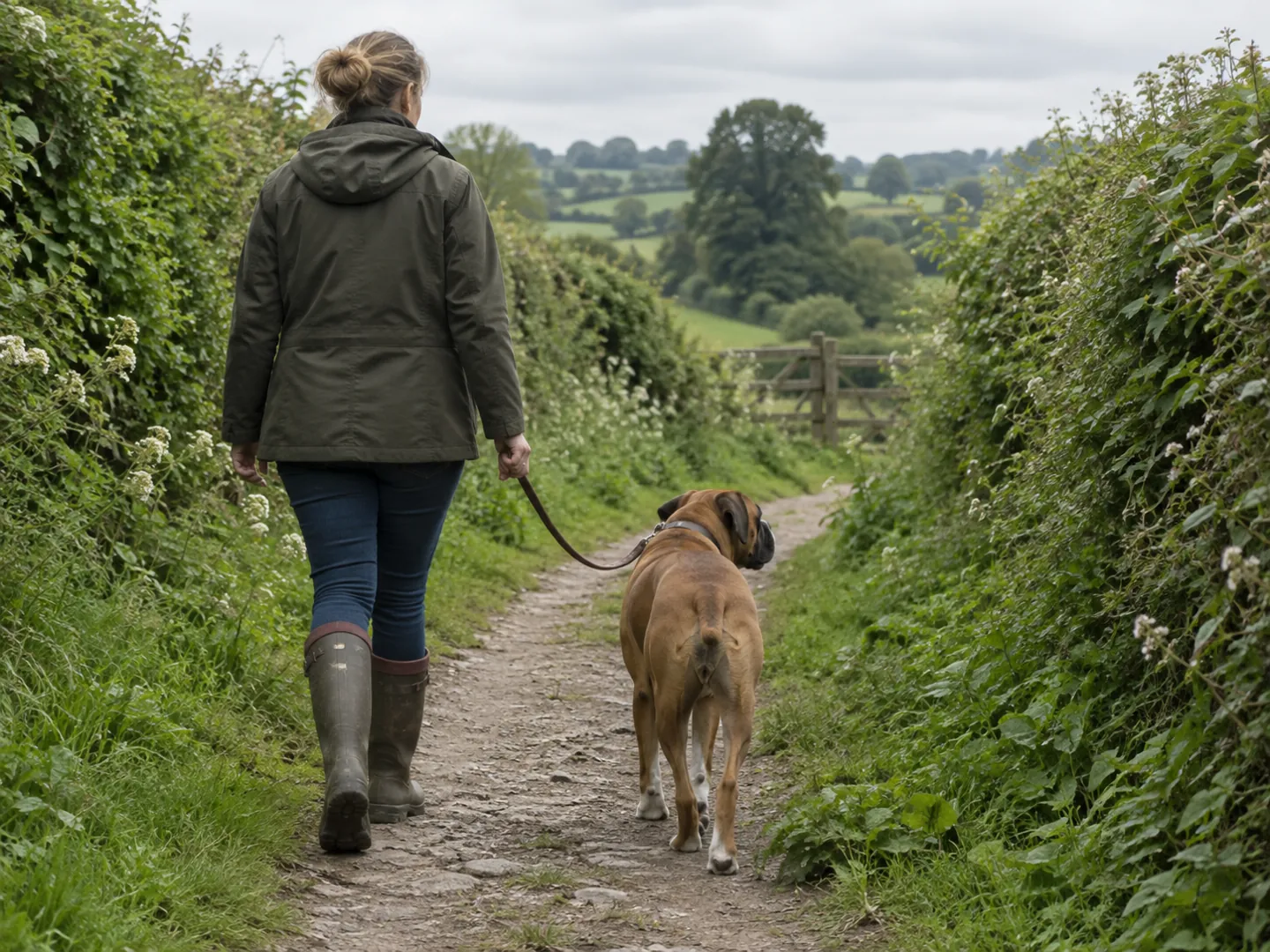
FOUR HABITS FOR OWNERS
These come straight from what the breed is known to need and the problems vets most often record in it.
The Kennel Club's exercise band for Boxers is more than two hours a day, so build walks and play into the routine.
A weekly brush of the short coat is a natural moment to notice any new lumps, which were among the common findings in Boxers.
Ear infections, eye ulcers, gum masses and dental disease were among the most common disorders recorded. Ask a vet about anything unusual.
The Kennel Club lists hip, elbow and eye testing schemes for Boxers that responsible breeders should complete.
TWO NUMBERS WORTH KNOWING
Both figures come from the veterinary records
of 3,219 Boxers under UK vet care in 2016.
10.46 years
Median age at death
Across 335 Boxers whose age at death was recorded, the median was 10.46 years. Females (10.41) and males (10.53) did not differ statistically.
LIFESPAN · RVC VETCOMPASS 2023
14.2%
Boxers diagnosed with a tumour or cancer in a year
About one in seven Boxers was diagnosed with neoplasia in 2016, and it was the most common recorded cause of death, at 12.43% of deaths.
CANCER · RVC VETCOMPASS 2023
The researchers found that many common Boxer problems, such as ear infections, dental disease and obesity, are typical of dogs in general, while tumours, gum masses (epulis) and eye ulcers were notably more likely in the breed.
A QUICK NEEDS CHECK
Pick a part of daily life to see what the Kennel Club and UK vet records say. The bar shows how much that part asks of an owner.
From the Kennel Club breed characteristics and the 2023 Royal Veterinary College VetCompass study. Individual dogs vary.
WHERE THE BOXER CAME FROM
The Kennel Club traces the Boxer to the Bullenbeisser, meaning bull biter, a German breed used to hunt bear, boar and deer in the 19th century. The first Boxer club was formed in Munich in 1895, and in 1904 the Boxer was one of the first breeds chosen in Germany for police training.
The breed has worked as a tracking dog and, the Kennel Club notes, in the armed forces as a messenger and pack carrier. The name may come from the way Boxers use their front legs when playing, like a sparring boxer.
In conversation
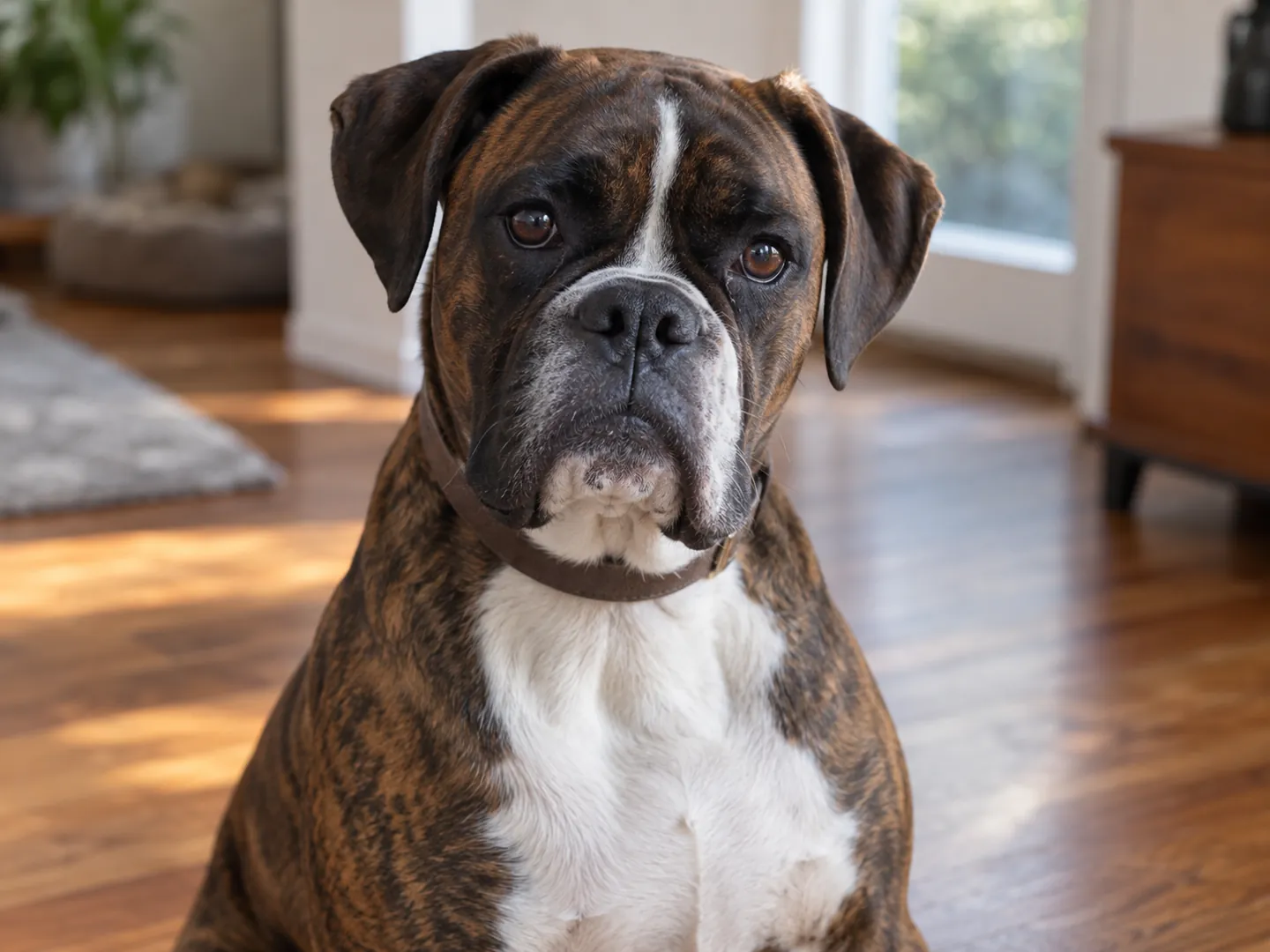
In UK veterinary records, adult Boxers averaged 30.4 kg. Males averaged about 33.0 kg and females about 27.6 kg. The Kennel Club lists the breed as large.
A 2023 Royal Veterinary College study found a median lifespan of 10.46 years, with no statistical difference between females and males. The Kennel Club lists the lifespan as over 10 years.
The Kennel Club lists more than 2 hours of exercise a day, which is its highest exercise band.
About 11% of Boxers in the UK study were white. White and non-white dogs did not differ in risk for any of the 34 most common specific disorders, and only two dogs in the study, one white and one not, were recorded as deaf.
It is described as moderately brachycephalic. The researchers found it has fewer common health problems linked to its body shape than the extreme flat-faced breeds studied before.
Each figure on this page comes from the sources below.
ABOUT THIS NAME
doodleboxer.com is part of the DoodleSale portfolio. It isn't in an auction right now, but you can ask about leasing it.